-
-
sample data

|
-
-
-
sample data

|
-
sample publication

|
|
Entrez Taxonomy
|
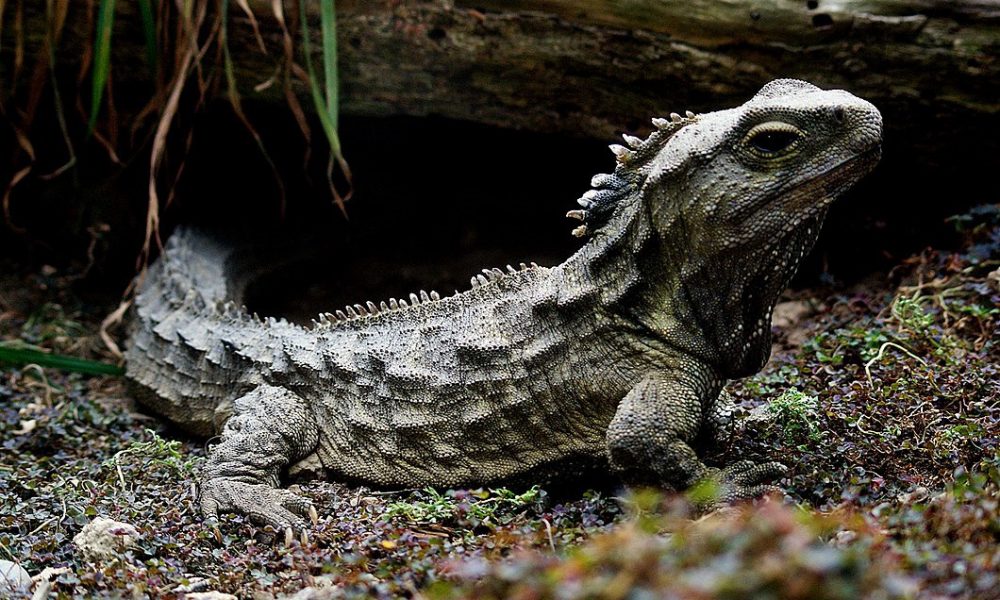
Sphenodon punctatus, the tuatara, is the only surviving member of
the order Rhynchocephalia ("beak-heads"), which first appeared in
the Middle Triassic period (~240 MYA) and became the world's most
prevalent group of small reptiles during the Jurassic period (~200-140
MYA). Although it resembles a lizard and is most closely related to
the order Squamata (snakes and lizards), Rhynchocephalia forms a
distinct order. The tuatara has been popularly referred to as a
"living fossil", though this term is discouraged by paleontologists
and evolutionary biologists as the fossil record does not suggest
the species has survived unchanged since it arose in the Triassic.
In the modern day, the tuatara's habitat was restricted to a group
of 32 islands off of the North Island of New Zealand (with a total
population estimated to approach 100,000 animals) until its
reintroduction to a North Island wildlife sanctuary in the early
21st century. The tuatara measures up to 80 cm from head to tail
and can weigh up to 1.3 kg. Their unusual features include a spiny
crest along their back, a second row of upper teeth, some unusual
skeletal features, and a third parietal eye - which though covered
with opaque scales in the adult nonetheless has its own lens, cornea,
and retina, and probably serves to regulate the circadian rhythm as
a part of the pineal complex. The tuatara is very long-lived,
surviving to well over 100 years in captivity and capable of breeding
in the wild at least into its 60s (with a female/male pair aged
80/111 successfully breeding in captivity).
|
|
|
|